

Table of Contents |
Introduction: Choosing Between Klaviyo and Mailchimp for Your Email Marketing
As our business world continually shifts towards digital, eCommerce enterprises are increasingly leveraging email marketing tools to stay connected with their customers and drive sales. The question isn’t whether to use an email marketing platform but rather which one to use. The key lies in understanding your business’s specific needs and how a platform can effectively cater to those. For this purpose, we’re diving deep into the capabilities of two industry-leading platforms: Klaviyo and MailChimp .
In today’s digital landscape, email marketing is no longer about merely sending generic newsletters or promotional offers. It’s about delivering personalized, meaningful messages to your customers right when they need them. That’s where robust platforms like Klaviyo and MailChimp step in, offering not only email marketing solutions but also tools for analytics, automation, and segmentation, among others.
Choosing an email marketing platform can feel overwhelming with a myriad of options available, each boasting its unique features. However, this decision holds significant impact on your business’s marketing strategy. A carefully chosen platform can streamline your operations, boost customer engagement, and ultimately enhance your return on investment. Today, we’ll compare Klaviyo and MailChimp, looking at their unique features, automation capabilities, and pricing structures.
While Klaviyo and MailChimp have much to offer, the choice ultimately comes down to your business’s specific needs and objectives. We’ll provide a comprehensive overview of each platform to aid your decision-making process, highlighting the importance of features such as email segmentation, automation in email marketing, and direct your online store integration.
Email Segmentation: Comparing Klaviyo and Mailchimp’s Capabilities
Effective email marketing is all about delivering the right message to the right audience. This is where the power of email segmentation comes into play. It allows businesses to divide their email list into smaller, more targeted groups based on certain criteria, be it demographics, buying behavior, or engagement levels.
Klaviyo stands out in the area of email segmentation with its advanced functionalities. It allows businesses to group subscribers based on a vast array of transactional and behavioral data. This means that you can tailor your email content according to specific actions taken by your customers. For instance, you can segment your audience based on their purchase history, browsing behavior, or even their interaction with previous emails. This high level of granularity in segmentation can drastically improve the relevance of your emails, leading to higher open rates, better engagement, and ultimately, increased sales.
Klaviyo’s flexibility in segment creation is another strong suit. Businesses can create and adjust segments dynamically based on changing customer behaviors and preferences. This feature is incredibly beneficial in maintaining the relevance of your email campaigns and ensuring that your messages resonate with your subscribers. Furthermore, Klaviyo’s real-time data updating ensures that your segments are always up-to-date, reflecting the latest changes in customer behavior.
On the other hand, Mailchimp offers more basic segmentation functionalities. While you can still segment your audience based on various criteria, it may not offer the same level of detail and customization as Klaviyo. However, it’s worth noting that Mailchimp’s simplicity in this area can be beneficial for smaller businesses or those just starting out with email marketing, providing a straightforward and user-friendly approach to segmentation.
One drawback of Mailchimp is the lack of real-time behavior tracking and predictive analytics in its segmentation tool. This means that you may not be able to target your customers as accurately based on their recent behaviors or predict future behaviors as effectively as you can with Klaviyo.
Whether you choose Klaviyo or Mailchimp for email segmentation largely depends on your specific needs and goals. If you require a detailed and highly personalized approach to segmentation, Klaviyo is the clear winner. However, if you’re after simplicity and ease of use, Mailchimp can still be a viable option.
Automating Your Email Marketing: Klaviyo vs. Mailchimp
Automation has become an integral aspect of modern email marketing strategies, and for good reason. When utilized effectively, it allows businesses to deliver the right message to the right person at precisely the right time, all while saving valuable time and resources.

Klaviyo’s automation is advanced and built to cater to businesses looking for customization and personalization in their email marketing campaigns. At the heart of their offering are behavioral-triggered emails. This feature uses real-time data to send out personalized messages based on specific customer actions or events. For example, you can set up an automated email to go out when a customer abandons their cart, has a birthday, or when they’ve been inactive for a while. This helps to keep your brand at the top of their mind and fosters a more personal relationship with your customers.
In addition, Klaviyo’s automation goes beyond just emails. With the ability to create customer profiles and carry out real-time segmentation, Klaviyo enables businesses to tailor their marketing strategies to different segments of their audience. Their trigger flow feature further simplifies the process of automating emails, saving businesses the hassle of manually monitoring and responding to customer behaviors.
On the other hand, Mailchimp also offers robust automation features with its comprehensive Customer Journey Builder. This tool allows businesses to design customized customer journeys based on their interactions with your brand. You can automate emails that correspond to specific steps in the customer journey, such as welcome emails for new subscribers or special offers for loyal customers.
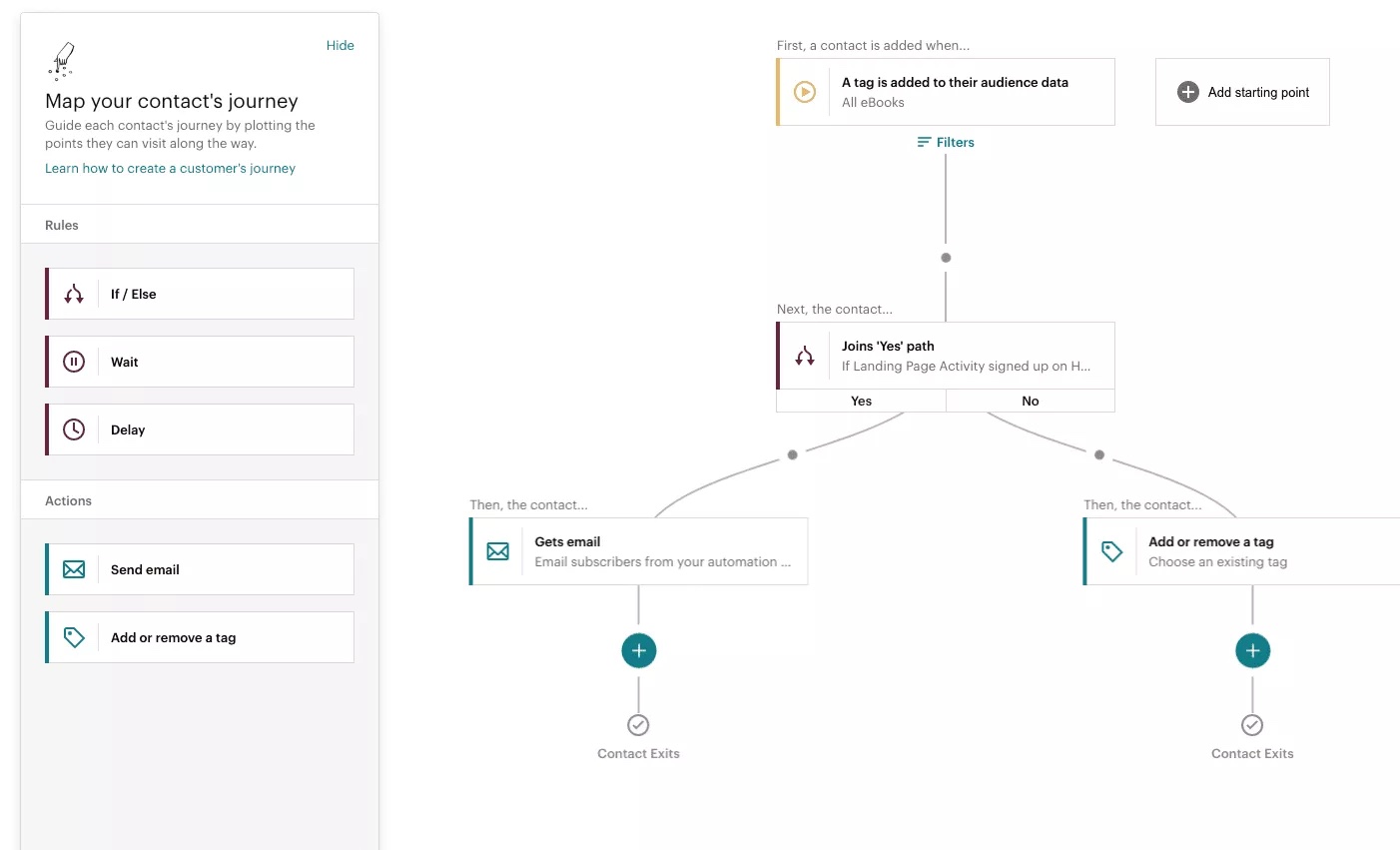
Mailchimp’s automation also extends to transactional emails, retargeting ads, and integrations. These features allow you to maintain consistent communication with your customers throughout their journey. For example, transactional emails can be automated to send invoices, order confirmations, and shipping notifications. Retargeting ads keep your brand visible to customers who have visited your website, and integrations with various platforms enable streamlined, automated workflows.
Both Klaviyo and Mailchimp offer powerful automation tools, each with their unique strengths. The choice between the two would depend on your specific requirements. If you seek flexibility and advanced personalization, Klaviyo could be the way to go. But if you want a more straightforward approach with a focus on the overall customer journey, Mailchimp might be a better fit.
Remember, leveraging these automation features requires a solid understanding of the platform and your marketing goals. Here’s where Pineapple Media can step in, offering expert guidance in setting up and optimizing your email automation for the best possible results.
Unique Features: A Close Look at Klaviyo and Mailchimp
Choosing the right email marketing platform involves assessing its unique features and how they align with your business needs. Let’s delve into the distinguishing features offered by Klaviyo and Mailchimp.
Klaviyo’s unique features:
- Direct Online Store Integration: Klaviyo’s integration capabilities with various online store platforms is a boon for eCommerce businesses. It allows for the seamless synchronization of customer data between your store and Klaviyo, providing the insights needed for personalized and effective email marketing campaigns. With Pineapple Media’s expertise, you can harness this integration to its full potential.
- SMS Marketing Tool: In addition to email marketing, Klaviyo supports SMS marketing. This dual-channel approach enables businesses to reach customers through their preferred mode of communication, potentially increasing engagement.
- Real-Time Tracking: Klaviyo’s real-time tracking feature provides businesses with instant updates on customer actions, allowing for the immediate tweaking of marketing strategies.
- Predictive Analytics: This tool helps you anticipate future customer behavior based on past actions. A powerful feature for personalized marketing campaigns, predictive analytics lets you stay one step ahead of your customers’ needs.
Mailchimp’s unique features:
- Landing Page Builder: Mailchimp offers an intuitive landing page builder, making it possible for businesses to create stunning, conversion-optimized landing pages without needing any coding skills. With Pineapple Media, you can utilize this feature to generate more leads for your business.
- Postcard Creator: A standout feature of Mailchimp, the postcard creator, lets businesses design and send physical postcards to customers around the world. It’s a unique way to stand out in your marketing efforts.
- Ad Retargeting: This feature allows businesses to target potential customers who visited their site but didn’t make a purchase. It’s an effective way to recapture lost sales opportunities.
- Multi-Channel Marketing: Mailchimp supports email, social media, and even physical mail marketing. This variety gives businesses the flexibility to reach their customers through multiple channels.
The choice between Klaviyo and Mailchimp largely depends on your business needs and preferences. If you value advanced data segmentation and predictive analytics, Klaviyo might be your go-to. Conversely, if multi-channel marketing and creative features like postcard creation appeal to you, Mailchimp could be the better choice. No matter your choice, Pineapple Media is here to guide you in utilizing these unique features to their fullest extent.
Klaviyo and Mailchimp: Exploring Integrations with Other Platforms
Klaviyo Integrations
Klaviyo has an impressive integration capacity that aids in streamlining your online store’s operations. The platform can seamlessly merge with leading eCommerce platforms, CRM systems, payment software, and other marketing tools.
Here are some key Klaviyo integrations:
- Ecommerce platforms: Klaviyo has direct integration with top ecommerce platforms such as BigCommerce, Magento, and WooCommerce. This direct integration allows easy data sharing between your store and Klaviyo.
- CRM Systems: Klaviyo integrates with popular CRM platforms such as Hubspot and Zoho. This allows for easy customer data management, enabling personalized marketing.
- Social Media: Klaviyo also integrates with major social media platforms such as Facebook and Instagram. It enables effective social media advertising and tracking of ad performance.
- Payment software: Klaviyo’s integration with payment platforms like Stripe or PayPal allows for transaction data tracking, assisting in understanding customer buying habits.
Mailchimp Integrations
Just like Klaviyo, Mailchimp also offers a broad spectrum of integrations with other platforms, though not as exhaustive as Klaviyo. These integrations help connect your online store with various ecommerce, social media, and CRM platforms.
Here are the key Mailchimp integrations:
- Ecommerce platforms: Mailchimp integrates with popular ecommerce platforms like WooCommerce, Magento, and BigCommerce. However, Shopify is not officially supported by Mailchimp anymore, which can be a limitation for Shopify store owners.
- CRM Systems: Mailchimp integrates with several CRM systems, including Zoho and Salesforce. This aids in streamlining customer data management.
- Social Media: Mailchimp supports integration with social media platforms like Facebook and Instagram, enabling social media advertising and campaign tracking.
- Event management: Unique to Mailchimp, it offers integration with event management tools like Eventbrite. This is particularly useful for businesses hosting events.
Pricing: A Comprehensive Comparison of Klaviyo and Mailchimp’s Plans
When it comes to pricing, Klaviyo and MailChimp adopt different models.
Absolutely! Here’s a pricing comparison table between Klaviyo and MailChimp:
| Klaviyo | MailChimp | |
|---|---|---|
| Free Plan | Unlimited contacts 500 emails / month 150 free monthly SMS/MMS credits Limited Features |
500 contacts 1,000 emails / month Limited Features |
| Plan for 500 Contacts |
Email Plan:
Email + SMS Plan:
|
Essential:
Standard:
Premium:
|
| Pricing Model | Subscriber-based, you pay only for active subscribers. All features available across plans. | Charges based on email lists. Access to all features requires a premium plan. |
The table above provides a direct comparison of the pricing tiers between Klaviyo and MailChimp. For a more detailed understanding of what each plan offers, consider visiting their respective websites or reaching out to Pineapple Media for personalized guidance based on your business needs.
Concluding the Klaviyo and Mailchimp Comparison: Making Your Decision
Choosing between Klaviyo and Mailchimp can be a complex decision. These two platforms, both leaders in the field of email marketing, offer an array of features and tools designed to make your marketing efforts more efficient and effective. However, their differences make the choice a matter of matching the right tool to your unique business needs.
Klaviyo, with its advanced segmentation functionality and direct integration with online stores, offers a powerful platform for businesses seeking to leverage transactional and behavioral data. Its real-time tracking and predictive analytics are particularly beneficial for businesses aiming to personalize their email marketing based on customers’ habits and preferences. Meanwhile, its SMS marketing tool extends your reach beyond email, providing a dual-channel approach to engage with your customers.
On the other hand, Mailchimp offers a more rounded suite of tools that cater to various marketing needs beyond email. Its intuitive landing page builder, unique postcard creator, and ad retargeting capabilities provide diverse ways to engage with your audience. Additionally, Mailchimp’s multi-channel marketing approach provides an excellent opportunity to reach customers on their preferred platform.
However, the final choice isn’t solely about features—it also involves considerations about pricing and your marketing budget. Klaviyo’s subscriber-based pricing might be more appealing if you have a large number of subscribers who are not consistently active, whereas Mailchimp’s list-based pricing could be more economical if you maintain several different lists for a smaller overall subscriber base.
Furthermore, the learning curve for each platform, the type of support they provide, and their compatibility with your existing systems should also factor into your decision-making process.
In conclusion, there’s no definitive answer as to which platform is better. The ideal choice depends on your specific business model, needs, and the strategic objectives of your email marketing campaigns. Both Klaviyo and Mailchimp are robust platforms that, when used effectively, can considerably enhance your marketing efforts.
Choosing an email marketing platform is a significant decision, and you don’t have to make it alone. Pineapple Media, with our wealth of experience and understanding of both platforms, is here to guide you through the process. We can help you set up and manage your email marketing campaigns, ensuring that whichever platform you choose, you get the most out of its features to benefit your online store.
The decision between Klaviyo and Mailchimp is ultimately about deciding which tools best empower you to connect with your customers. No matter the platform you choose, remember: the key to successful email marketing lies in providing value to your customers, building relationships, and enhancing their experience with your brand.
How Pineapple Media Can Help
Pineapple Media, a marketing agency, can assist you in setting up a Shopify store and integrating these platforms. With the right tools and expert guidance, your online store can reach new heights in no time.
Pineapple Bites

Is SEO Dead? How AI Search Is Changing the Way Customers Find You
Posting without a plan isn't a strategy. Learn how to create a social media plan that builds your brand,

Posting Isn’t a Strategy: How to Create a Social Media Plan
Posting without a plan isn't a strategy. Learn how to create a social media plan that builds your brand,

When to Redesign Your Website (and When It’s Time to Rebrand)
"Looks old" and "we've outgrown who we are" are different problems. Here's how to tell which one you're facing.

AI in Marketing
Explore how artificial intelligence is utilized within modern marketing agencies.

Promotional Items for Your Brand
Discover the best promotional items for your brand.

Marketing for Small Business
Explore options and strategies for small businesses to engage with marketing agencies.

The True Social Media Advertising Cost
Learn about factors influencing expenses, compare different platforms, and get tips on optimizing your budget for maximum ROI.

The Cost of Advertising on Google
Discover the true cost of advertising on Google.

Automation in Marketing: Benefits and Applications
Discover the benefits and applications of automation in marketing.

The importance of Integrated Marketing Communications
Learn about integrated marketing communications.